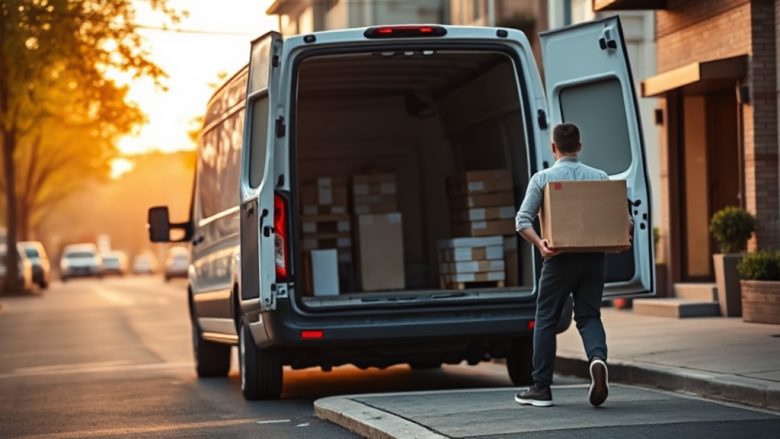
Last mile delivery is the final leg of the supply chain — the moment a parcel leaves the last sorting hub or local depot and arrives at a customer’s door. It’s the part the buyer actually sees, remembers, and judges. Everything upstream, from factory to freight, hinges on this last stretch because a delayed or damaged final delivery erases the goodwill built by every earlier step. If you’ve been wondering how to get started with last mile delivery, the good news is that the barrier to entry is lower than most people assume. You don’t need a national fleet or a seven-figure budget. You need a clear plan, a realistic cost model, and a disciplined first route.
This roadmap walks you from idea to first delivery in practical order. We’ll cover the decisions that actually matter, the numbers you should sanity-check before spending, and the small experiments that tell you whether this business suits you before you commit real money.
What Last Mile Delivery Really Involves
Strip away the jargon and last mile delivery is a logistics service with three moving parts: parcels, routes, and proof. Parcels come from a client — a retailer, a marketplace seller, a pharmacy, a restaurant, a warehouse. Routes are the sequences in which those parcels get dropped. Proof is the record that the drop happened correctly: a photo, a signature, a scan, a timestamp.
The economics are unusual. Last mile is typically the most expensive segment of the entire delivery chain, often accounting for a disproportionate share of total shipping cost. That’s because it’s the least efficient part: one van, one driver, many stops, unpredictable traffic, and customers who aren’t home. It’s also the most visible, which means clients will pay for reliability even when they complain about price. That tension — high cost, high visibility, high willingness to pay for consistency — is exactly why small operators can carve out a living here. You’re not competing on scale. You’re competing on dependability in a defined area.
Before you go further, be honest about what you’re signing up for. This is an operations business. Early mornings, route planning, driver management, and customer calls when something goes wrong. If you want a hands-off investment, this isn’t it. If you enjoy solving a daily puzzle where the pieces are time, distance, and people, you’ll find it satisfying.
Step 1: Research Your Local Market and Pick a Niche
Your first real decision is geography and customer type. A generalist courier fighting for every parcel against national carriers is a hard start. A specialist serving one need in one area is far easier to launch and defend.
Spend a week mapping your local demand. Who ships regularly within a fifteen-mile radius? Independent retailers fulfilling online orders. Pharmacies delivering prescriptions. Bakeries and meal-prep kitchens. Auto parts shops. E-commerce sellers who’ve outgrown the post office queue. Each of these has different requirements: some need same-day, some need refrigerated handling, some need age verification or a signature.
Talk to at least ten potential clients before you buy anything. Ask what they currently use, what frustrates them, and what they’d pay for a better option. You’re listening for a repeated complaint — late deliveries, no tracking updates, drivers who won’t wait, minimum volume requirements they can’t meet. That complaint is your opening. A niche built around a specific frustration is worth more than a broad service that does everything adequately.
Also check the practical ground truth. Are there loading restrictions in your target area? Congested streets where parking is impossible? Buildings with difficult access? These details shape your route times and your pricing far more than any spreadsheet will suggest.
Step 2: Work Out Your Costs and Pricing Before You Spend
Most first-time operators underprice because they only count fuel. The real cost stack is bigger, and ignoring it is how new delivery businesses quietly bleed money.
Your recurring costs will include the vehicle (lease, finance, or purchase), insurance — and commercial delivery insurance is not the same as personal cover — fuel or charging, maintenance and tyres, mobile phone and data, route planning or tracking software, and driver wages if you’re not driving yourself. Add a reserve for damage claims and unpaid invoices. On top of that sits your time. If you drive twelve hours a day for a month and pay yourself nothing, you haven’t tested a business; you’ve tested a hobby.
Then build your price from the cost up, not the market down. Calculate your cost per stop and cost per mile, add your target margin, and see whether that number is one a client will accept. If it isn’t, your niche or your area is wrong — not your price. Dropping your rate to win the first client is the single most common mistake in this industry, because it sets an expectation you can never raise.
A simple starting model: estimate stops per hour realistically (city centres often deliver eight to twelve; suburban routes can hit fifteen to twenty), multiply by your working hours, and divide your daily cost by that number. If the result looks unworkable, adjust the route density before you adjust your ambition.
Step 3: Get the Legal and Operational Basics Right
Before your first parcel moves, sort out the unglamorous foundations. You’ll need a registered business entity, appropriate commercial vehicle insurance, and any local licences your area requires for goods delivery. If you’re carrying food or pharmaceuticals, additional handling rules apply and you should confirm them directly with the relevant authority rather than assuming.
Decide early whether you’ll drive yourself or hire. Driving yourself is cheaper and teaches you the operation from the inside — you’ll learn which routes are unrealistic and which clients are difficult. Hiring gives you scale but adds recruitment, training, and reliability risk. Most successful small operators drive for the first few months, then add their first driver once a single route is consistently full and profitable.
You’ll also need basic tools: a phone with a reliable mount, a scanner or scanning app, a tracking system clients can access, and a simple way to capture proof of delivery. Don’t overbuy software at this stage. A capable tracking platform with proof-of-delivery photos and a driver app will cover your first year. Choose one that lets clients see status without calling you — that single feature reduces your admin load more than anything else.
Finally, write down your service standards. Delivery window, cut-off time for same-day orders, what happens if nobody’s home, how you handle damage. Having these in writing prevents the disputes that eat into small margins.
Step 4: Plan Routes and Run Your First Deliveries
Route planning is where profit is made or lost. A poorly sequenced route can turn a profitable day into a loss through wasted fuel and overtime. Start with a defined zone — a postcode cluster or a small town — and refuse work outside it until the zone is dense. Density beats distance every time.
For your first week, run one route with a manageable stop count, perhaps twenty to thirty drops. Time each leg honestly. Note where you waited, where parking failed, where a customer wasn’t ready. Those notes become your real route plan, and they’ll be more accurate than any algorithm’s first attempt.
Set a simple proof-of-delivery process from day one: a photo at the door, a scan at the point of handover, and a timestamp. Send the customer a notification before arrival so they’re ready. That one habit cuts failed deliveries dramatically and makes you look professional next to larger competitors.
Track three numbers daily: stops completed, on-time percentage, and cost per stop. If on-time is below ninety-five percent, fix the route before adding clients. If cost per stop is rising, examine your density and your waiting time. These three figures tell you more about your business than any monthly report.
Only after a route is consistently full and profitable should you add a second one — and ideally a second driver, not a second shift for yourself. Growth that outpaces your operational control is the fastest way to lose the clients you worked to win.
Frequently Asked Questions
How much money do I need to start a last mile delivery business?
It depends heavily on whether you already own a suitable vehicle. If you do, a lean start covering insurance, licensing, basic tracking software, and a small marketing budget can be achievable for a few thousand pounds. If you need to buy or lease a van, add that cost plus commercial insurance. The important discipline is to model your monthly costs before you commit, not after.
Do I need a licence to operate a delivery service?
Requirements vary by location and by what you carry. Standard parcel delivery in most areas needs a registered business and commercial vehicle insurance, while food, alcohol, and pharmaceutical deliveries bring extra handling rules. Confirm the specifics with your local authority before your first job rather than relying on general advice.
How do I find my first delivery clients?
Direct conversations work best. Approach independent retailers, pharmacies, and online sellers in your chosen zone and ask about their current delivery frustrations. Offer a small trial — one route, one week — so they can test you with low risk. Referrals from that first satisfied client will often bring the second and third.
Can I start last mile delivery while keeping my current job?
Yes, and many people do. Early morning and evening delivery windows suit part-time operation, and running a single route while employed lets you test demand without betting everything. The constraint is reliability: clients need consistent pickup times, so choose a window you can genuinely commit to every working day.