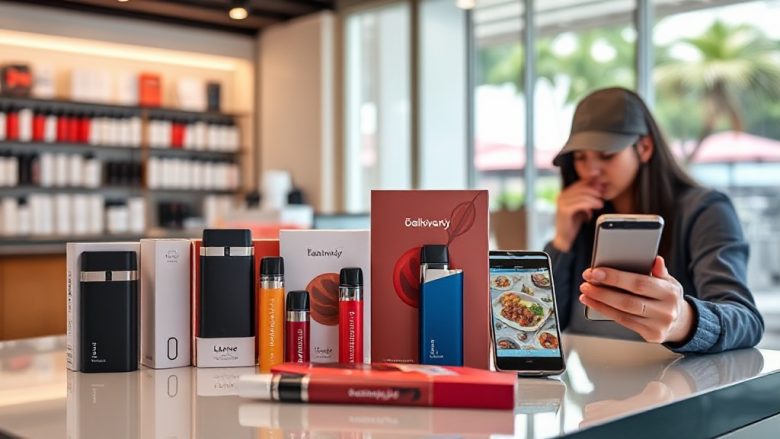
Borrowed Expectations: Where Vape Delivery Habits Might Go Next
People adapted to same-day expectations in food, groceries and pharmacy items faster than almost anyone predicted. The question now is what carries over to vape retail, and whether a SG Vape same day delivery habit becomes as ordinary as ordering lunch. The short answer: the expectation is already here, but the shape it takes next depends on how retailers handle speed, discretion and product trust.
This is not a forecast of exact dates or market sizes. It is a scenario exercise. Three plausible futures are worth watching, each with different implications for how adult vape users in Singapore order, wait and judge a delivery service.
What Same-Day Expectations Actually Borrow
Same-day delivery did not arrive as a single invention. It spread because adjacent categories trained people to expect it. Ride-hailing taught customers to track a courier in real time. Grocery apps taught them that a short basket could arrive within hours. Pharmacy and convenience delivery taught them that regulated or age-restricted goods could still move quickly when the process is clear.
What carries over to vape retail is mostly the mental model, not the logistics. Customers begin to assume that if a product is listed as in stock, the wait should be measured in hours rather than days. That expectation is reasonable, but it is also fragile. A missed window or a silent order status can undo months of goodwill.
The stronger lesson from neighbouring industries is that speed alone is not the product. Reliability is the real expectation, and speed is only the visible part of it. A same-day promise that holds most of the time beats a faster promise that holds occasionally.
Scenario One: Same-Day Becomes the Default
In this scenario, same-day delivery stops being a premium option and becomes the baseline for online vape purchases in Singapore. Customers compare retailers less on price and more on whether the order arrives before the evening. Retailers respond by tightening inventory visibility, publishing cut-off times and treating delivery status as part of the product page.
The practical effect is that a vape supplier singapore has to be honest about stock. If a listing says a device is available, the delivery clock should start from that claim, not from a warehouse check that happens later. In this future, the retailers that win are the ones that under-promise slightly and over-deliver consistently.
What customers would notice first
- Clear cut-off times shown before checkout, not after payment.
- Order tracking that reflects real courier movement rather than a static label.
- Fewer substitutions and fewer “out of stock after order” messages.
The trade-off is margin pressure. Same-day logistics cost more per order, and retailers cannot absorb that indefinitely without either raising prices or narrowing their catalogue. Customers may accept a smaller, more reliable range over a sprawling one that ships slowly.
Scenario Two: Speed Splits Into Tiers
In this scenario, the market fragments. Some buyers want the fastest possible delivery and will pay for it. Others want a lower price and will accept next-day or a scheduled window. Retailers respond with tiers: express, standard and scheduled, each with its own cut-off and its own fee.
This is where discretion becomes a differentiator rather than an afterthought. A Sg vape disposable order is small and light, which makes it easy to deliver quickly, but it also means packaging and handover matter. Customers notice whether a parcel looks obviously like a vape delivery, and they notice whether the courier follows instructions.
In a tiered market, the middle option often becomes the default. Express exists for urgency, but most repeat buyers settle into a predictable window that fits their day. Retailers who explain their tiers plainly, without hiding fees until checkout, tend to keep customers longer than those who advertise a headline speed they rarely meet.
How tiers change buying behaviour
When delivery options are clear, customers start planning around them. They learn the cut-off, they order earlier in the day, and they stop expecting miracles at 11pm. That planning reduces failed deliveries and makes the whole system calmer for both sides.
Scenario Three: Trust Becomes the Bottleneck
In this scenario, speed stops being the main story. Customers have already been trained to expect fast delivery, so the differentiator shifts to authenticity and clarity. Buyers ask harder questions about where a product came from, whether the packaging is sealed and whether the retailer stands behind what it sells.
This is where established brand names matter. A customer searching for Singapore vape delivery is often trying to solve two problems at once: getting the product quickly and avoiding a counterfeit or stale item. Retailers that can answer both, with visible product listings and consistent stock, earn repeat orders even if they are not the absolute fastest.
The warning here is that speed without trust is a short-lived advantage. A fast delivery of the wrong product is worse than a slower delivery of the right one, because it costs the customer time and forces a return conversation. In this scenario, the retailers that publish clear product details and keep their catalogue current pull ahead.
What a trust-first retailer looks like
It shows real product names, not vague categories. It keeps listings such as sg vape lana and related pod systems accurate and in stock. It answers delivery questions before the customer asks, and it treats lana vape delivery as a service promise rather than a marketing line. None of this is dramatic, but it compounds.
What Carries Across All Three Futures
Across every scenario, a few things stay constant. Customers want to know when an order will arrive, what it will cost and whether the product is genuine. Retailers who answer those three questions clearly, on the page and in the confirmation message, tend to survive whatever shape the market takes.
The sg vape delivery habit is likely to keep borrowing from adjacent industries: the tracking of ride-hailing, the cut-off clarity of grocery apps, the discretion of pharmacy delivery. None of those expectations are unreasonable. The retailers that treat them as normal, rather than as special requests, will set the pace.
For adult customers, the practical advice is simple. Order earlier than you think you need to, check the cut-off before checkout, and favour retailers who are specific about stock and delivery windows. For retailers, the advice is equally simple: pick one promise you can keep every day, and let the rest follow. Speed gets attention, but consistency is what turns a first order into a habit.